A Cinematic Exploration of Adolescent Discontent: "Kettic│" Review
Giovanni Tortorici's film, "Ketticè," delivers an insightful and captivating depiction of adolescent ennui, juxtaposing the authentic struggles of youth with the often-clueless world of adults. The movie, a collaborative effort with producer Luca Guadagnino, reaffirms Tortorici's unique talent for illustrating the aimless yet profoundly felt experiences of teenagers. Through meticulously crafted characters and an inventive cinematic style, the narrative explores themes of privilege, class disparity, and the search for identity, all while maintaining a playful and engaging tone that resonates deeply with audiences.
The film opens with a panoramic view of Palermo, beautifully underscored by the ethereal voice of Lebanese singer Oumeima El Khalil, establishing a mood of introspective detachment. This artistic choice, reminiscent of Guadagnino's signature soundtracks, immediately sets the stage for Giulio's story in 2012, a time when Facebook and the iPhone 5 were integral to teenage life. Giulio, portrayed by Salvatore Gallina, is a privileged teenager teetering on the brink of academic failure, embodying a profound sense of directionlessness despite his affluent surroundings.
Tortorici's directorial prowess shines through in his innovative use of visual storytelling. A memorable slow-motion sequence captures Giulio's disengagement from his teacher and peers, extending into the school parking lot. The shift to normal speed, accompanied by the iconic "You Spin Me Right Round" blasting from his car stereo, cleverly signifies Giulio's escape into his own world. Another striking example is the camera's perspective shift after Giulio's breakup: initially positioned low to empower him, it rises to eye-level post-breakup, shrinking him back to a vulnerable teen, perfectly encapsulating his performative sadness through a tearful selfie posted online.
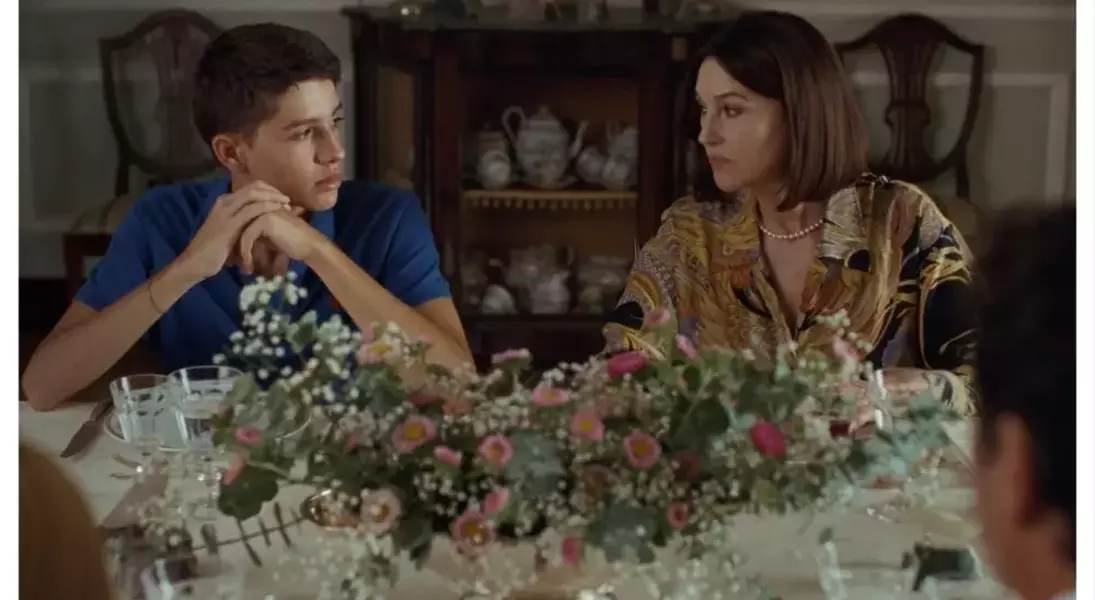
Giulio's life of ease, living in a historic palazzo with his parents, Vittoria (Monica Bellucci) and Antonio (Tommaso Cristiano Wirz), and attending a private school, offers little challenge or stimulation. His quest for meaning leads him to Ketty, or Ketticè (Rachele Testagrossa), a street-smart girl from a less privileged background known for her provocative nature. Their unlikely bond, fueled by Giulio's financial allowance and Ketty's knowledge of the local cannabis scene, takes them to Palermo's Bonagia district. Here, Giulio experiences a mild sense of danger and excitement, unsure if his growing dependency is on the cannabis or on Ketty's captivating, rebellious allure.
The film masterfully highlights the stark contrast between Giulio's privileged existence and Ketty's challenging reality. While Giulio's peers treat the struggles of the lower classes as a mere spectacle, protected by their wealth, Ketty faces a future devoid of such buffers. The film subtly critiques class dynamics, showcasing how the wealthy can afford to be detached, while others grapple with the harsh realities of their environment. Bellucci's portrayal of Vittoria, delivering acid-tongued remarks at the dinner table, adds a layer of ironic flamboyance, allowing audiences to laugh with her, rather than at her, in contrast to the more exploitative humor directed at Ketty's rivals.
Tortorici’s success in "Ketticè," much like in his debut "Diciannove," stems from his genuine understanding of the teenage psyche. He recognizes that adolescent ennui is not synonymous with emptiness, and that angst is merely one facet of a teenager's complex emotional landscape. By keenly observing his actors, many of whom are newcomers, and drawing from his own youth, Tortorici crafts a narrative that is both authentic and deeply moving. This film not only reinforces his initial promise but also demonstrates his evolving command over cinematic language, using it to amplify character and mood with remarkable confidence and creativity.